

Colostrum Supplements for Weight Loss: How Consumers Compare IgG Potency, Gut Health Claims, and Sourcing Standards in 2026
As Searches for "Best Colostrum Supplement for Weight Loss" Rise, Cowboy Colostrum Emerges as One Example Consumers Are Evaluating
New York, NY, Jan. 21, 2026 (GLOBE NEWSWIRE) -- Disclaimer: This article is for informational purposes only. It is not medical advice. Always consult a qualified healthcare professional before starting supplements. If you purchase through links in this article, a commission may be earned at no additional cost to you.
As consumer interest in gut health and metabolic wellness continues into 2026, searches for phrases like "best colostrum supplement for weight loss" have increased. Rather than reflecting agreement around a single product, this search trend highlights growing consumer confusion about how colostrum supplements differ in sourcing, potency claims, and quality disclosures.
This report does not recommend or endorse any supplement. Instead, it examines how consumers compare colostrum supplements for weight loss-related goals, focusing on evaluation criteria such as first-day milking collection, IgG transparency, serving size context, and manufacturing standards.
We're including Cowboy Colostrum as one example throughout this analysis. Why? Because according to the company, they publicly disclose details about their sourcing and handling practices — which makes them useful for illustrating how shoppers typically assess products in this category. That's it. One example among many.
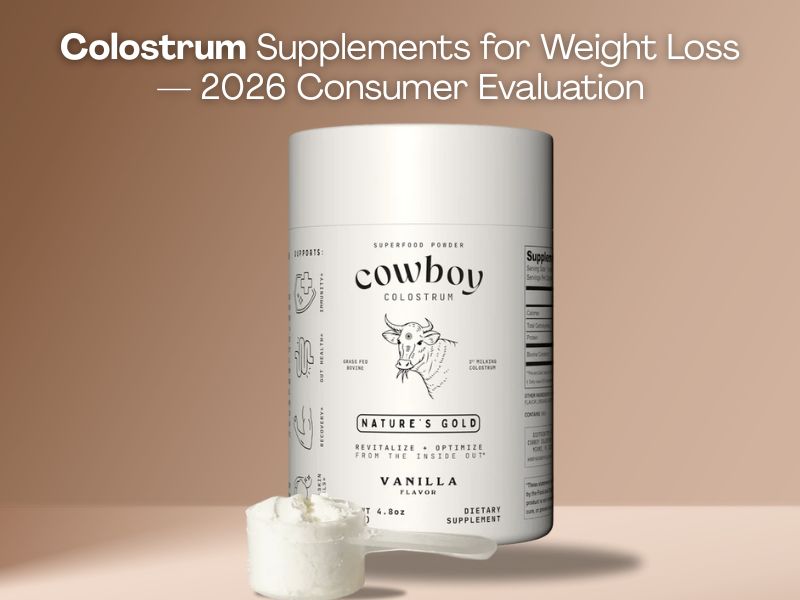
View the current Cowboy Colostrum offer (official Cowboy Colostrum page)
What Do Consumers Mean by the "Best Colostrum Supplement for Weight Loss"?
When people search for the "best colostrum supplement for weight loss," they're not looking for a clinical definition. They're looking for confidence. They want to know they're not wasting their money on something weak or poorly made.
In practice, this search phrase has become consumer shorthand for products that appear to preserve more of colostrum's naturally occurring components based on sourcing and processing disclosures. When shoppers evaluate these claims, they tend to focus on measurable factors:
First-day milking collection — Colostrum collected within the first 24 hours contains higher concentrations of immunoglobulins and other naturally occurring components than colostrum collected later. This is probably the most consistent quality marker consumers look for.
Serving size transparency — How much colostrum are you actually getting per scoop? Research studies used 10-60 grams per day. If a product provides a very small serving size while using terms like "strongest" in marketing, some consumers may choose to dig deeper into the label details and testing disclosures.
Testing disclosures — Third-party testing for contaminants (heavy metals, glyphosate, pesticides) and verification of bioactive content. Some brands publish results; others don't.
Sourcing standards — Grass-fed, pasture-raised, U.S.-sourced, calf-first collection practices. These aren't just marketing terms — they reflect different approaches to quality.
What these searches don't reflect is guaranteed outcomes. "Best" doesn't mean "will definitely help you lose weight." It means consumers are trying to identify products that appear more potent based on label transparency and sourcing claims.
Why "Best Colostrum Supplement for Weight Loss" Is a Search Term — Not a Verdict
If you're wondering why colostrum keeps showing up in weight loss conversations, the answer is gut health. Not because colostrum burns fat — it doesn't — but because the gut-metabolism connection is real, and consumers are connecting those dots.
Research in the field of digestive health suggests that disruptions in normal gastrointestinal function may influence broader metabolic processes. This relationship is complex, varies significantly between individuals, and remains an area of ongoing scientific study.
Colostrum contains naturally occurring components such as immunoglobulins and proteins that researchers have studied in relation to digestive and immune system function. These findings are ingredient-level observations and do not establish outcomes for finished supplement products.
What the research actually shows:
A study published in Nutrition (Antonio et al., 2001) examined 8 weeks of bovine colostrum supplementation in active men and women doing resistance training. The colostrum group (20g/day) experienced a significant increase in bone-free lean body mass — a mean increase of 1.49 kg. The whey protein control group experienced an increase in total body weight instead.
A review in Nutrients (2021) noted that "in conjunction with resistance training, there is some evidence that, compared with placebo, bovine colostrum can promote greater gains in muscle mass, strength, and losses of body fat, although other studies have shown no differences."
The honest take: These are ingredient-level findings from specific study populations. They don't establish weight loss outcomes for any finished supplement product. Colostrum is not a fat burner. It's not a metabolism booster. The interest in this category appears to stem from broader discussions around gut-focused wellness and body composition research, rather than from evidence of direct weight loss effects.
How Consumers Compare Colostrum Supplements for Weight Loss Goals in 2026
Given the search volume around colostrum and weight management, shoppers have developed informal evaluation frameworks. These typically center on four criteria that can be verified without relying on brand marketing alone.
First-day milking disclosure — Whether the brand specifies collection within the first 24 hours post-birth. Brands that don't disclose collection timing may be using colostrum harvested over a longer window.
Serving size in grams — The actual amount of colostrum powder per serving, not just "scoops" or proprietary blend language. Research protocols used 10-60 grams daily; most supplements provide 1-3 grams.
Third-party testing transparency — Whether the brand publishes or makes available Certificates of Analysis for contaminant screening and IgG verification. Many brands claim third-party testing but don't provide accessible results.
IgG percentage disclosure — Whether the brand states a minimum IgG concentration. Some brands guarantee 20-30% IgG; others don't disclose this metric at all.
These criteria allow consumers to compare products based on verifiable disclosures rather than subjective marketing language.
Key Criteria Used to Evaluate Colostrum Supplements for Weight Loss
Consumers searching for the best colostrum supplement for weight loss often use the criteria below to compare products without relying on marketing claims alone.
Consumers evaluating colostrum supplements for personal wellness goals often focus on these factors:
Collection Timing: First-Day vs. Later Collection
Not all colostrum is created equal. The bioactive concentration in colostrum drops significantly after the first 24-48 hours post-birth. First-day milking — colostrum collected within the first 24 hours — typically contains the highest concentrations of immunoglobulins (IgG, IgA, IgM) and other naturally occurring proteins and peptides.
When a brand advertises "first-day milking" or "6-hour colostrum," they're signaling that they prioritize this collection window. Brands that don't specify collection timing may be using colostrum collected over a longer period, which could mean lower bioactive concentration.
Serving Size Reality Check
This is where math matters. Most research studies examining colostrum's effects on body composition used doses between 10-60 grams per day. Most consumer supplements provide 1-3 grams per serving.
That gap doesn't automatically indicate a problem, but it's useful context when comparing research protocols with typical consumer serving sizes. A product that provides 3 grams per serving is delivering more colostrum than one providing 1 gram per serving, even if both use similar positioning.
Full-Fat vs. Fat-Stripped Formulations
Some colostrum brands remove fat during processing to create a lighter, more soluble product. Others retain the natural fat content. This isn't just a texture preference — colostrum's bioactive compounds include fat-soluble components.
Full-fat formulations may preserve more of the original nutrient profile. Fat-stripped formulations may mix more easily into beverages. Neither approach is objectively "better," but understanding what you're getting matters.
Third-Party Testing Transparency
The supplement industry isn't as regulated as pharmaceuticals. Third-party testing provides an independent check on what's actually in the product. Key things to look for:
- Contaminant testing: Heavy metals, pesticides, glyphosate, microbial contamination
- Potency verification: Is the IgG concentration what the label claims?
- Certificate of Analysis availability: Can you request or view actual test results?
Some brands publish testing results. Others claim third-party testing but don't make results accessible. The difference matters if transparency is important to you.
How Cowboy Colostrum Approaches These Criteria (One Example)
To illustrate how these evaluation factors play out in practice, here's how one brand — Cowboy Colostrum — addresses them, according to their publicly available disclosures:
Collection timing: According to the company, Cowboy Colostrum sources its bovine colostrum exclusively from first-day milking on grass-fed U.S. dairy farms, following a calf-first collection approach where newborn calves receive adequate colostrum before any surplus is used for supplements.
Formulation: The brand states that its formulation remains full-fat and unstripped, and that each serving provides approximately 3 grams of colostrum powder.
Testing: The company indicates that its products are manufactured in GMP-certified facilities and undergo third-party testing for quality and purity, including screening for glyphosate, heavy metals, and pesticides. Specific testing results and methodologies are not publicly posted and may require direct verification with the brand.
Sourcing: According to the company, colostrum is sourced from grass-fed, pasture-raised cows on U.S. dairy farms.
Readers seeking label and sourcing details can view the current Cowboy Colostrum offer (official Cowboy Colostrum page).
This is one approach. Other brands may prioritize different factors — higher IgG standardization, capsule format, lower price point, international sourcing. What matters is understanding what you're evaluating and why.
How Shoppers Compare Colostrum Supplements for Weight Loss Goals
This Category May Make Sense For People Who:
Prioritize gut health as part of their wellness approach — If you already understand that digestive function affects everything from energy to body composition, and you're comparing products commonly discussed in the gut-health category, colostrum is one option consumers often evaluate within that framework.
Are already consistent with diet and exercise — Research on colostrum and body composition was conducted in active individuals doing resistance training. Colostrum is often discussed as a complement to existing diet and exercise routines; it is not a substitute for them.
Can commit to consistent, long-term use — Studies showing body composition effects lasted 8-12 weeks with daily supplementation. If you're looking for quick results, this isn't that.
Value transparency in sourcing and testing — If you want to know exactly where your supplements come from and how they're processed, the colostrum category rewards that due diligence.
Other Options May Be Better For People Who:
Have dairy allergies or severe lactose intolerance — Colostrum is a dairy product. If you react to dairy proteins or lactose, this category may not be appropriate without medical guidance.
Expect colostrum to be a weight loss solution — It's not. Research suggests potential support for body composition when combined with training, not standalone weight loss effects.
Are working with a limited supplement budget — Quality colostrum isn't cheap. If cost is a primary concern, there may be other gut health interventions that make more sense.
Prefer capsules over powders — Cowboy Colostrum specifically offers powder format. If you strongly prefer capsules, other brands in this category may be a better fit.
Pricing and Availability Context
According to publicly available information on the company's website, Cowboy Colostrum is offered in multiple formats, including individual bottles, starter kits, bundles, and stick packs, with pricing that may vary by flavor and purchase format. Promotional offers, subscription terms, and pricing are subject to change and should be verified directly on the official Cowboy Colostrum page prior to making a purchase decision.
Frequently Asked Questions
Q: What is the best colostrum supplement for weight loss?
A: When consumers search for the best colostrum supplement for weight loss, they are typically comparing factors such as first-day milking collection, serving size transparency, sourcing standards, and third-party testing — not looking for guaranteed outcomes. "Best" is subjective and depends on individual priorities. No colostrum supplement is clinically proven to cause weight loss, and products in this category are generally discussed in the context of gut health and body composition research rather than direct fat loss.
Q: Does colostrum actually help with weight loss?
A: Colostrum is not a fat burner or weight loss drug. Research suggests it may support body composition goals indirectly — one study found colostrum supplementation increased lean body mass in active individuals doing resistance training. Individual results vary significantly.
Q: What's the difference between "strongest" colostrum and regular colostrum?
A: "Strongest" is consumer shorthand for products that appear to preserve more bioactive compounds based on sourcing and processing. First-day milking collection, higher serving sizes, full-fat formulation, and transparent testing are factors shoppers use to assess potency. It's not a regulated term with a clinical definition.
Q: How long does it take to see results from colostrum?
A: Research on colostrum and body composition typically lasted 8-12 weeks with consistent daily use. Consumer experience varies widely. Colostrum is not expected to produce rapid or dramatic results — any benefits appear to develop gradually.
Q: Is Cowboy Colostrum the best option?
A: Cowboy Colostrum is one example in a growing category. According to the company, it offers first-day milking collection, full-fat formulation, grass-fed U.S. sourcing, and 3 grams per serving. Whether it's "best" depends on your priorities — other brands may offer different strengths like higher IgG standardization, capsule format, or lower pricing. Evaluate based on what matters to you.
Q: Can I take colostrum if I'm lactose intolerant?
A: Colostrum contains lactose, though typically less than regular milk. People with mild lactose intolerance may tolerate it, especially with lactase supplements. Those with severe intolerance or dairy allergies should consult a healthcare provider before trying colostrum.
Q: How much colostrum should I take for metabolic support?
A: Research studies used 10-60 grams per day. Cowboy Colostrum provides 3 grams per serving. There's no established "optimal" dose for metabolic support in healthy adults. Follow manufacturer recommendations and consult healthcare providers for personalized guidance.
The Bottom Line
Searches for the best colostrum supplement for weight loss reflect consumer interest in understanding how products differ — not proof of a single superior option. The shoppers getting the most value from this category are those who understand what they're actually evaluating: sourcing transparency, collection timing, serving size reality, and testing disclosures.
Cowboy Colostrum represents one approach — first-day milking, full-fat, grass-fed, U.S.-sourced, 3g per serving. Whether that approach aligns with your priorities is a decision only you can make, ideally with input from a healthcare provider who knows your specific situation.
The colostrum market will continue evolving. New brands, new formulations, new research. What won't change is the principle: understand the criteria, evaluate the evidence, and make your own informed decision.
View the current Cowboy Colostrum offer (official Cowboy Colostrum page)
Disclaimers
FDA Health Disclaimer: These statements have not been evaluated by the Food and Drug Administration. This product is not intended to diagnose, treat, cure, or prevent any disease. Colostrum is a dietary supplement and should not replace prescribed medical treatment.
Professional Medical Disclaimer: This article is educational and does not constitute medical advice. If you are currently taking medications, have existing health conditions, or are considering changes to your health regimen, consult your physician before starting any colostrum supplement. Do not change or discontinue any medications without your physician's guidance.
Results May Vary: Individual results will vary based on factors including age, baseline health, activity level, diet, consistency of use, and other individual variables. Research findings reflect specific study populations and may not predict individual outcomes. Results are not guaranteed.
FTC Affiliate Disclosure: This article contains affiliate links. If you purchase through these links, a commission may be earned at no additional cost to you. This compensation does not influence the accuracy or integrity of the information presented.
Pricing Disclaimer: All prices mentioned were accurate at the time of publication (January 2026) but are subject to change. Always verify current pricing on the official Cowboy Colostrum website before purchasing.
Publisher Responsibility: The publisher has made every effort to ensure accuracy at the time of publication. We do not accept responsibility for errors, omissions, or outcomes resulting from the information provided. Verify all details directly with Cowboy Colostrum and your healthcare provider before making decisions.
Contact: howdy@cowboycolostrum.com (Mon-Fri 9am - 5pm EST)

howdy@cowboycolostrum.com
(Mon-Fri 9am - 5pm EST)

Legal Disclaimer:
EIN Presswire provides this news content "as is" without warranty of any kind. We do not accept any responsibility or liability for the accuracy, content, images, videos, licenses, completeness, legality, or reliability of the information contained in this article. If you have any complaints or copyright issues related to this article, kindly contact the author above.
